A coach that has read every session you have logged
Ask anything, any time, of a coach that already holds your thresholds, your gaps and your whole season, and brings the endurance literature to your numbers.
Imagine a coach who has read every session you have ever logged, remembers all of it, and is awake at eleven at night when you are staring at tomorrow's session wondering whether to do it. That is the part of coaching that has always been rationed. Nymiva's coach is not rationed.
It already knows you before you type anything
The reason most training advice is generic is that most training advice is given by someone who does not have your data in front of them. A forum answer cannot know your threshold. A search result cannot know that your last three quality sessions were downgraded, or that your event has twenty minute climbs and you live somewhere flat.
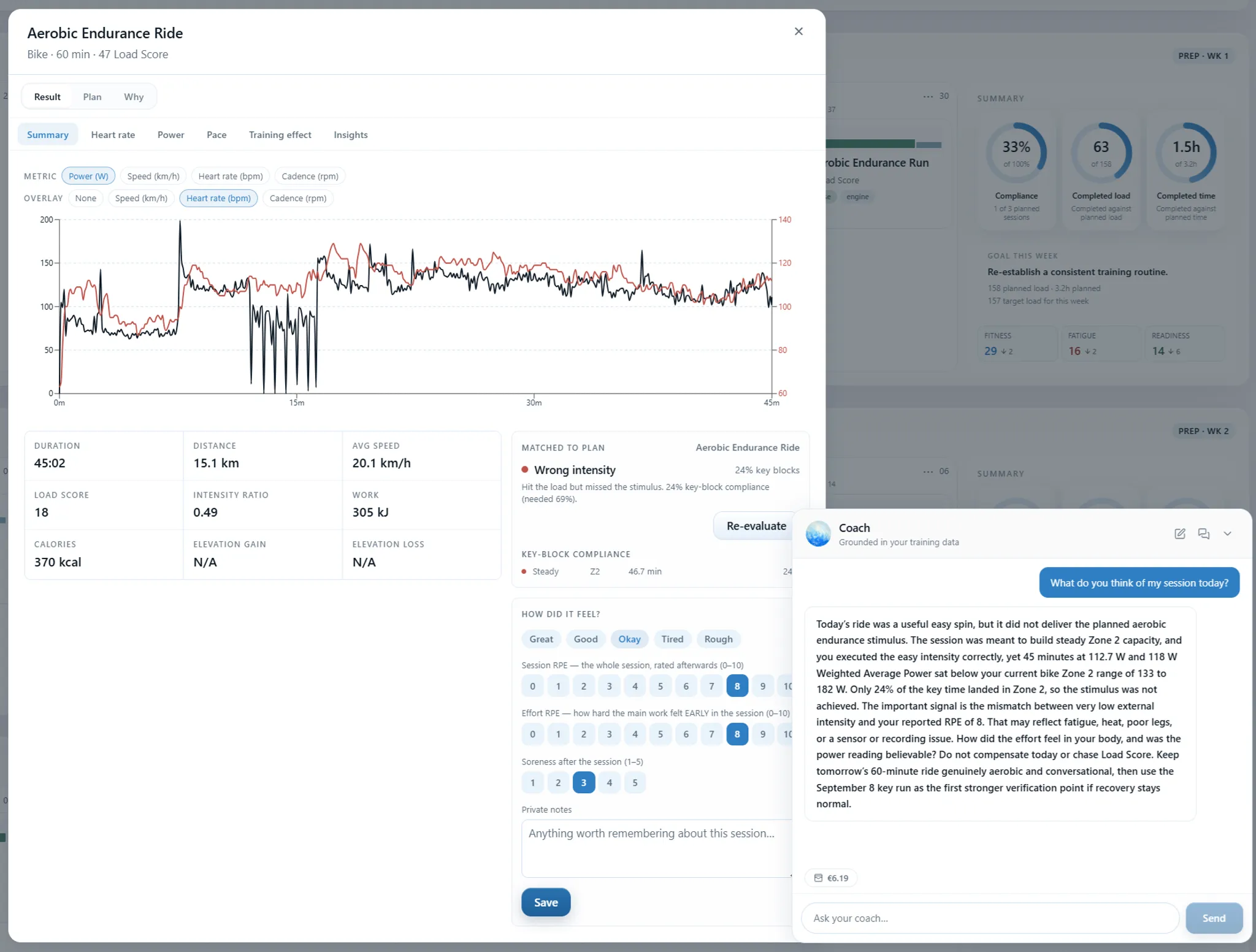
The coach opens every conversation already holding your picture. Your thresholds and how recently they were measured. Your zones. What you can hold for five minutes and for an hour. The gaps the Focus Lab has found between what your event demands and where you currently sit. Your season, the sessions ahead of you, and what you actually did with the ones behind you.
So you do not brief it. You ask it.
Ask what tomorrow's session is for and it will tell you which gap it is aimed at and why it lands now rather than in three weeks. Ask whether you should race this weekend and it can weigh your form, your event calendar and what that race would cost the block you are in. Ask why last Tuesday felt awful and it can look at what you actually produced, what you produced the week before, and what else was on the calendar around it.
Every question, at the moment you have it
Coaching questions do not arrive on schedule. They arrive at the top of a climb, at the kitchen table on a Sunday night, in the taper when the doubt is loudest and there is nothing to do about it.
A weekly check-in cannot answer those. It answers seven days of questions at once, a week late, by which point you have already made the decisions yourself.
The coach is there when the question is. It costs you nothing to ask something small, which turns out to matter more than it sounds. The questions athletes never ask a human coach are the ones that seem too minor to spend a message on, and those are often the ones quietly steering the season. Should I move this session. Is this niggle worth caring about. Am I eating enough for what I am about to do. Is my easy pace actually easy.
The whole field, applied to your specific case
Modern language models carry an enormous amount of the endurance literature, the coaching tradition and the physiology. That breadth is genuinely useful, and on its own it is also unfocused. Broad knowledge with no idea who it is talking to produces the same article everyone else has already read.
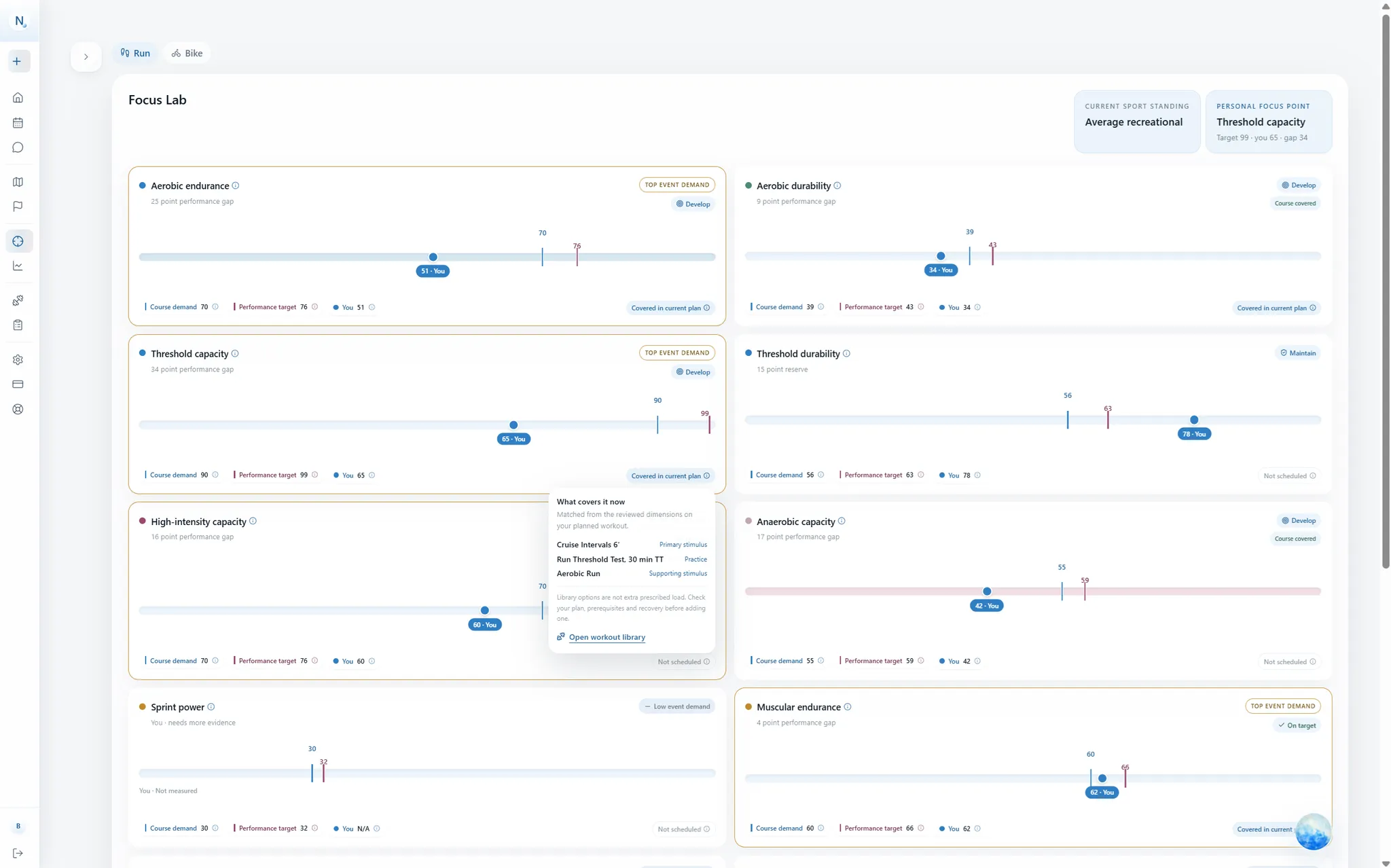
What makes it useful is the pairing. The breadth reaches your specifics, so instead of a general explanation of decoupling you get what your decoupling did across this block and what that suggests about your durability. Instead of a general account of why tapers work, you get what yours is aimed at and how your own fatigue is expected to fall before race day.
It will translate, too. Ask it to explain a concept in plain terms, ask it what a study actually supports, ask it to compare two approaches and say where they disagree. Ask it in whatever way is comfortable, at whatever level of detail you want, as many times as you like, without ever using up somebody's patience.
It can act, and it asks first
Answers are only half of it. When something in your plan should change, the coach can put together a proposal and hand it to you: what it wants to change, why, and what it expects to happen. You read it and you decide. Nothing moves in your season because a conversation went well.
It can also record the things that matter and are easy to forget. Tell it your threshold has moved, that your week has lost two evenings, that you are ill, that your goal has changed, and the plan can respond rather than carrying on as though you were the athlete it met three months ago. The planning engine does the rest, inside the same guardrails it always applies.
Why the answers hold up
An answer you cannot check is a guess with good grammar. The most useful thing about this coach is not how it writes, it is that it is accountable to something.
It answers from your data, and it tells you which data it used, so you can look at the same numbers and disagree. When it prescribes work, the structures come from a vetted library where each one already carries its purpose, its approved dose and its stop rule, so what you are given is something known to be sound rather than something composed on the spot. When it is not sure, it says the range instead of the number, and it tells you when a reading is getting old.
And it stays inside the safety rules the rest of the product runs on, including when you push it. Training guidance is what it offers. Anything that belongs to a doctor gets sent to one, and it will say so plainly rather than guessing.
That combination is the point. Breadth without your data is generic. Your data without breadth is a dashboard. Either one without accountability is a confident voice you have no way to check.
What it is like to use
Most days you will not need it. The plan is already there, the session already states what it is for, and you can just train.
The days you will need it are the ones that would otherwise cost you a week. The session you were about to force through when you should not have. The race you were about to enter without knowing what it would take from your season. The number you were about to trust that was measured in March. The pattern in your own history you have never had time to look for.
That is what having a coach is actually for, and until now it was something you either paid a lot for or went without.